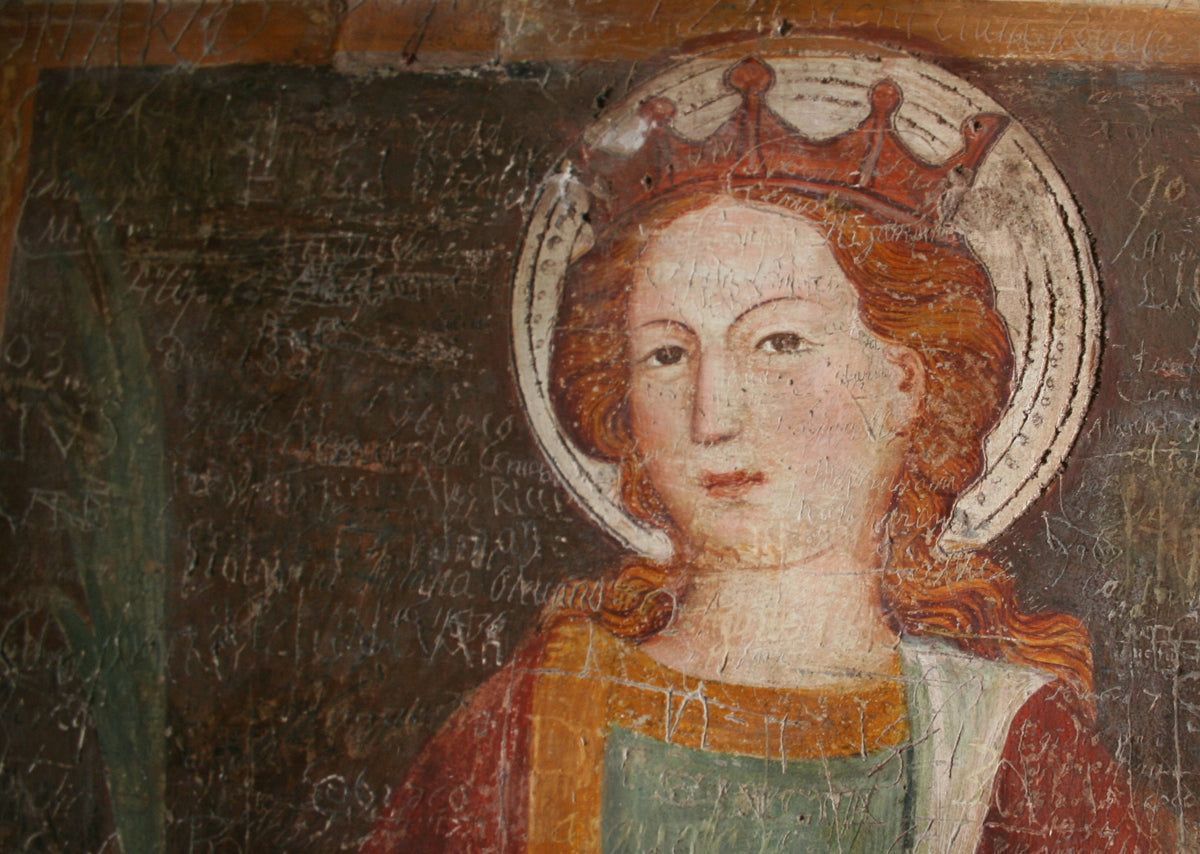


All Saints Day is approaching and we are hoping to reflect our favorite saints not as a costume but more practically in everyday clothing as a tangible all-day (and behind just this day) reflection!
Here's how to start.
Find some of your favorite art pieces or photos of your saint friend for inspiration.
- What colors surround their image? Colors tend to point to a part of their story.
- Focus on the kind of draping in their garments and mimic it through outerwear. A cape over a seamless gown? Try an oversized sweater with a dress or romper that has colors paralleling the saint's garments.
- Use jewelry and accessories to reflect images that come from the saint's story, whether that's a floral headband for saints who were virgin-martyrs, nautical accessories for those who went across seas on missions, or a leather belt for saints who were soldiers—the possibilities are endless!
- Mix modern and classic pieces to avoid looking like a costume.
Here are some ideas to get the creativity juices flowing:

St. Philomena
Shades of pink since she is a virgin & martyr (a mix of white and red representing the purity and passion of martyrdom). Metallic accessories since she is pictured with the instruments of her martyrdom: arrows, anchor, sword. Simple draping representing her innocence and submission to God's plan for her story.

St. Hedwig
Royal colors (monarch of Poland) but also accents of grey as she practiced the interior life of the Cistercian's after her husband's passing. Consider velvet garments and wear something fur, she is painted wearing the royal ermine fur representing her authority and purity.

St. Joan of Arc
Maroon, navy, and silver pointing to her military attire, armor, and martyrdom. Consider leather pieces reflecting her fierce bravery mixed with cotton comfortable garments reflecting her humility. Wear your hair up as she sacrificed cutting off her hair so she could better serve as a soldier.

St. Padre Pio
Shades of brown and red as a nod to his stigmata. Wool and textured fabrics reflecting the habit of Capuchins. Fingerless gloves (which he wore always) and oversized outerwear reflecting the draping of his garments.

St. Charles Lwanga
White (purity), orange (zeal; also martyred by fire), and red (martyr) are his colors. To reflect the garments he's depicted wearing, one-shoulder draping is the way to go.

St. Teresa of Kolkata
Blue and white are the colors of the Missionaries of Charity. Headbands, long cardigans, and crossover draping to reflect her habit. Consider linens and cottons which are the main materials worn in Kolkata, India.